Senin, 06 Februari 2017

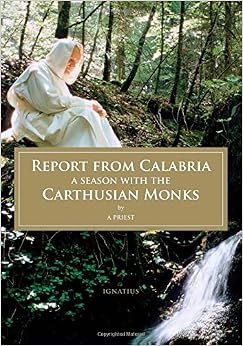
Free Ebook Report from Calabria: A Season with the Carthusian Monks

Free Ebook Report from Calabria: A Season with the Carthusian Monks

You could finely include the soft data Report From Calabria: A Season With The Carthusian Monks to the gizmo or every computer hardware in your office or residence. It will assist you to always proceed checking out Report From Calabria: A Season With The Carthusian Monks every time you have downtime. This is why, reading this Report From Calabria: A Season With The Carthusian Monks doesn't offer you troubles. It will offer you essential resources for you that wish to begin writing, blogging about the comparable publication Report From Calabria: A Season With The Carthusian Monks are different publication area.

Report from Calabria: A Season with the Carthusian Monks

Report from Calabria: A Season with the Carthusian Monks


Report from Calabria: A Season with the Carthusian Monks


Free Ebook Report from Calabria: A Season with the Carthusian Monks

Report From Calabria: A Season With The Carthusian Monks. Is this your downtime? Just what will you do after that? Having extra or spare time is really outstanding. You can do everything without pressure. Well, we suppose you to spare you few time to review this e-book Report From Calabria: A Season With The Carthusian Monks This is a god e-book to accompany you in this spare time. You will not be so hard to recognize something from this e-book Report From Calabria: A Season With The Carthusian Monks Much more, it will certainly help you to get far better details as well as experience. Also you are having the great works, reviewing this book Report From Calabria: A Season With The Carthusian Monks will not include your mind.

Spending the time for checking out a publication will provide you the extremely helpful system. The system is not only regarding getting the expertise to associate with your particular condition. However, sometimes you well need enjoyable thing from guide. It can accompany you to run the moment meaningfully and well. Yeah, great time to read a book, great time to enjoy. And also the presence of this book will certainly be so accurate to be in your own.

You recognize, as the benefit of reading this Report From Calabria: A Season With The Carthusian Monks, you may not just obtain brand-new understanding. You will certainly really feel so fun and also satisfying when reading it. It confirms by the existence of this book, you can make use of the moment perfectly. Spending the time when going to house will certainly work enough when you understand really exactly what should do. Reviewing is one of the best means to do to accompany your extra time. Obviously, it will certainly be much more precious than only chatting to the other close friends.

We will certainly show you the most effective as well as best method to get publication Report From Calabria: A Season With The Carthusian Monks in this world. Bunches of compilations that will support your responsibility will be here. It will certainly make you really feel so best to be part of this web site. Ending up being the member to consistently see just what up-to-date from this publication Report From Calabria: A Season With The Carthusian Monks site will make you feel ideal to look for the books. So, recently, and also right here, get this Report From Calabria: A Season With The Carthusian Monks to download and install as well as save it for your precious worthy.

Report from Calabria: A Season with the Carthusian Monks

Review

"I am very moved to be able to read about the Carthusian monks in Calabria. It is heartening to share even a day with those holy men. They make me so grateful for the vocation I was given, but their lives are even more meaningful for those living in the midst of modern pain. To see them in the pages of this book eating, working, and praying in silence and solitude is just amazing. They are basically attempting to find God within the human conditions most human. Through them we see so clearly that we find God by accepting our lives  as gifts from him and by appreciating our being born, in flesh and blood, in profound likeness to God himself, as fully revealed by the Second Person of the Trinity, who became man. The Report from Calabria could very well be a report from God himself telling us what we cry and anguish to know." --Mother Dolores Hart, O.S.B, Author of The Ear of the Heart "Report from Calabria is a beautiful book.  The author's short sketches capture the silent rhythms of worship and contemplation at the heart of Carthusian life and the humanity of hidden lives in the cloister. The photographs show a world that few people get to see.  Most importantly, this book points to the profundity of daring to enter a dialogue of silence with the heart of the Lord.  Each one of us invited to know the Lord in silence.  Report from Calabria is a guidebook to a beautiful place, and to the beauty of interior and silent communion with the Lord." --Most Rev. James D. Conley, S.T.L., Bishop of Lincoln, Nebraska "This book is a gem.  The Carthusians have long captivated the imagination of the Catholic world: by their austerity, their silence, their seclusion, and their mysteriousness. Although they will never say so themselves, they've lived up to their motto: 'Never reformed because never deformed.' This book is an honest and stunningly beautiful view of the inside life of a Charterhouse. Through these pages you can feel the cold of the cell, smell the pasta in the midday meal, and sense the profound reverence of the Carthusian liturgy. This book will make you want to pray." -- Most Rev. Michael C. Barber, S.J., Bishop of Oakland "The Carthusian life, typically so unknown and hidden, has found another privileged account. The anonymous priest-author enjoyed four months of full participation in Carthusian life in Calabria. The letters written during his monastic stay and collected here display an observant eye and sensitive insights for both external detail and for the rich depth of dedicated silence, solitude, and prayer that marks the Carthusian life. Anyone moved some years back by the extraordinary film Into the Great Silence will find in this book another fascinating appreciation for the daily self-giving of these hidden monks who live all for God." --Fr. Donald Haggerty, Author, Contemplative Provocationsand The Contemplative Hunger

Read more

Product details

Paperback: 160 pages

Publisher: Ignatius Press (August 15, 2017)

Language: English

ISBN-10: 1621641309

ISBN-13: 978-1621641308

Product Dimensions:

7 x 0.4 x 9.9 inches

Shipping Weight: 14.6 ounces (View shipping rates and policies)

Average Customer Review:

4.8 out of 5 stars

11 customer reviews

Amazon Best Sellers Rank:

#489,252 in Books (See Top 100 in Books)

Anyone who has seen the documentary "Into Great Silence" will enjoy this book, too. The movie introduced me to the Carthusians and I have subsequently read a number of books by or about them. This is written by a priest as a journal - or rather letters - to his acquaintances. I enjoyed it. I wish he had more entries on the way they celebrate Mass and more about their contemplative lifestyle. Other than that I recommend the book and the photographs are very cool!

I liked every page of this book. The author described men who are truly extraordinarily ordinary, men of solitude who are seeking to encounter God in silence and are united with Jesus in His solitude in the desert. I would recommend this book to any souls who are drawn (aspire) to encounter God in solitude & silence.

A real glimpse in the life of the Carthusian Monks. It is good to know that there is such a place - where they accept outsiders, to just quiet yourself and your mind. To all people who are searching for peace and silence, get this book.

An easy read and very personable report of time spent at one of the oldest Charterhouses in Europe, about what one would expect out of a series of letters to family and friends. Particularly enjoyable are the many photos that accompany the text. The author chose to remain anonymous.

I appreciate the beautiful pictures as well as letters.

I was disappointed with this book because it gave a description of some of the exterior aspects of Carthusian life and said very little about the interior life of growth in the Spirit.

Great seller! The content was what I expected.

a beautiful book.

Report from Calabria: A Season with the Carthusian Monks PDF
Report from Calabria: A Season with the Carthusian Monks EPub
Report from Calabria: A Season with the Carthusian Monks Doc
Report from Calabria: A Season with the Carthusian Monks iBooks
Report from Calabria: A Season with the Carthusian Monks rtf
Report from Calabria: A Season with the Carthusian Monks Mobipocket
Report from Calabria: A Season with the Carthusian Monks Kindle

Report from Calabria: A Season with the Carthusian Monks PDF

Report from Calabria: A Season with the Carthusian Monks PDF

Report from Calabria: A Season with the Carthusian Monks PDF

Selasa, 31 Januari 2017

Download PDF The story Haggadah

Download PDF The story Haggadah

The Story Haggadah. A task could obligate you to consistently enrich the understanding and also encounter. When you have no enough time to boost it directly, you can get the encounter and also knowledge from reading guide. As everybody understands, publication The Story Haggadah is preferred as the home window to open up the world. It means that reading book The Story Haggadah will certainly offer you a new way to discover every little thing that you need. As guide that we will offer right here, The Story Haggadah

The story Haggadah

The story Haggadah


The story Haggadah


Download PDF The story Haggadah

Just what's your necessity to be checking out material in this time? Is that guide that relates to the tasks? Is that the book that can amuse you in your lonely time? Or, is that only type of book that you can review to come with the leisure time? Everyone has different reason why they select the specific book. It will come with particular cover design, intriguing title, suggested subject, required motif, as well as expert writers.

When you really feel difficult to obtain this publication, you could take it based on the link in this post. This is not only concerning exactly how you get the book to review. It is about the important thing that you can accumulate when being in this globe. The Story Haggadah as a fashion to recognize it is not provided in this website. By clicking the web link, you can locate the new book to read. Yeah, this is it!

The soft data suggests that you should go to the web link for downloading and install then conserve The Story Haggadah You have actually owned the book to read, you have positioned this The Story Haggadah It is simple as going to guide establishments, is it? After getting this brief description, hopefully you could download and install one and also begin to review The Story Haggadah This book is quite easy to review every time you have the free time.

The story Haggadah

Language Notes

Text: English, Hebrew

Read more

Product details

Paperback: 83 pages

Publisher: Ktav Pub. House; First Edition edition (1990)

Language: English

ISBN-10: 0881252778

ISBN-13: 978-0881252774

Package Dimensions:

10.8 x 8.3 x 0.3 inches

Shipping Weight: 8 ounces (View shipping rates and policies)

Average Customer Review:

3.0 out of 5 stars

1 customer review

Amazon Best Sellers Rank:

#1,258,241 in Books (See Top 100 in Books)

We used this again this year and constantly find ourselves skipping around. We find ourselves pouring the wine, but never being told to actually drink it. The pictures are beautiful and the text is easily read by 3rd graders, but there are too many stories to choose from.

The story Haggadah PDF
The story Haggadah EPub
The story Haggadah Doc
The story Haggadah iBooks
The story Haggadah rtf
The story Haggadah Mobipocket
The story Haggadah Kindle

The story Haggadah PDF

The story Haggadah PDF

The story Haggadah PDF

Jumat, 13 Januari 2017

Free PDF Charles Taylor, Michael Polanyi and the Critique of Modernity: Pluralist and Emergentist Directions

Free PDF Charles Taylor, Michael Polanyi and the Critique of Modernity: Pluralist and Emergentist Directions

Those are some of benefits checking out Charles Taylor, Michael Polanyi And The Critique Of Modernity: Pluralist And Emergentist Directions When you have chosen to get and also review the book, you need to allot the formula and also get the easily to check out till finished. This publication tends to be a needed book to call for some responsibilities and activities. When other people are still worried about the works as well as target date, you could feel much more relaxed because you have actually obtained guide flawlessly.

Charles Taylor, Michael Polanyi and the Critique of Modernity: Pluralist and Emergentist Directions

Charles Taylor, Michael Polanyi and the Critique of Modernity: Pluralist and Emergentist Directions


Charles Taylor, Michael Polanyi and the Critique of Modernity: Pluralist and Emergentist Directions


Free PDF Charles Taylor, Michael Polanyi and the Critique of Modernity: Pluralist and Emergentist Directions

Currently, please welcome thee newest book to provide that can be your option to check out. Now, we have that book entitle Charles Taylor, Michael Polanyi And The Critique Of Modernity: Pluralist And Emergentist Directions This is exactly what makes many individuals feel preferred to take the listings only for getting this publication. When many individuals are aiming to get this publication by taking some lists, we are right here to relieve your means. Are you among those individuals who are much appreciated of this publication? Allow's open your possibility right here.

What do you think of Charles Taylor, Michael Polanyi And The Critique Of Modernity: Pluralist And Emergentist Directions as one that we provide now? This is an excellent publication that comes from the updated recently publication to publish. When great deals of individuals try to get this book trouble, you can be simpler to join with us as well as seek for it for simpler methods. As well as this is you time to notify your pal regarding this excellent information. Supplying the great information regarding this book to others will certainly ease after that not to get trouble anymore, in addition for far better information.

Everyone has their method to like analysis; it is not just for creative people. Lots of people additionally check out the book due to the fact that nothing. Juts wish to take output from upgraded inspiration and also thought, maybe! It may be additionally the method just how they worry about the presence of the originalities of entertaining system. Judging guide for everyone will certainly be distinctive. Some may think that Charles Taylor, Michael Polanyi And The Critique Of Modernity: Pluralist And Emergentist Directions is extremely straight, but some will really take pleasure in reviewing it.

Even analysis is an easy thing as well as it's really straightforward without investing much cash, many individuals still feel careless to get it. It becomes the trouble that you constantly encounter daily. Therefore, you have to start discovering how to spend the time effectively. When it includes the great publication, you might love to read it. As instance is this Charles Taylor, Michael Polanyi And The Critique Of Modernity: Pluralist And Emergentist Directions, it can be your starter publication to find out analysis.

Charles Taylor, Michael Polanyi and the Critique of Modernity: Pluralist and Emergentist Directions

Review

“Charles Lowney has shown here the convergence between the critiques of modern narrow rationalism offered by Michael Polanyi, on one hand, and 20th Century phenomenology (which was my starting point), on the other. A lot of interesting insights become available when these and other critiques are brought into contact. We are all in Lowney's debt for his valuable contribution.” (Charles Taylor, McGill University, author of A Secular Age, Modern Social Imaginaries and Sources of the Self)“Readers of this collection will be well rewarded. There are two main paths to the task of critiquing modernity, the deconstructive and the reconstructive paths. The authors of the essays comprising this book have wisely chosen the latter, and they do so with clarity, thoroughness, and insight. Professor Lowney should be commended for putting this collection together, as well as for writing several of the essays himself. The various approaches to Michael Polanyi’s thought are especially welcomed.” (Jerry Gill, author of Deep Postmodernism: Whitehead, Wittgenstein, Merleau-Ponty and Polanyi, 2010) “A splendid combination of philosophical erudition and moral sensitivity, this work brings into conversation two of the most important philosophers of our time, Michael Polanyi and Charles Taylor. The substantive commentaries, comparisons, and criticisms gathered in this volume offer readers convincing alternatives to the intellectually dubious scientism and corrosive moral relativism of our secular age. Strongly recommended.” (John F. Haught, Georgetown University, author of The New Cosmic Story: Inside Our Awakening Universe , 2017) “Lowney and his collaborators show that Charles Taylor extends the work of Michael Polanyi and Marjorie Grene, constituting a powerful alternative form of modernity that avoids the dead end of C.P. Snow’s The Two Cultures. An important signpost on the road not (yet) taken.”  (Lawrence Cahoone, Holy Cross, author of The Orders of Nature (2014), The Dilemma of Modernity (1988), and The Ends of Philosophy: Pragmatism, Foundationalism and Postmodernism , 2002) “Modern times have tended to be dominated by a Cartesian model that is almost exclusively narrowly rationalistic/intellectualist and reductionist. Two prominent challenges to that view have come from Charles Taylor and Michael Polanyi. The time is surely ripe for a deeper engagement between the two and that this volume undoubtedly provides. Its contributors wrestle with the distinctive notions of each (such as Polanyi’s tacit knowledge and emergent being and Taylor’s authenticity and re-enchantment) to see how far a more integrated and inclusive alternative approach can be created.” (David Brown FBA is Emeritus Professor of Theology, Aesthetics and Culture at the University of St Andrews)   

Read more

From the Back Cover

This book provides a timely, compelling, multidisciplinary critique of the largely tacit set of assumptions funding Modernity in the West.  A partnership between Michael Polanyi  and Charles Taylor's thought promises to cast the errors of the past in a new light, to graciously show how these errors can be amended, and to provide a specific cartography of how we can responsibly and meaningfully explore new possibilities for ethics, political society, and religion in a post-modern modernity.

Read more

See all Editorial Reviews

Product details

Paperback: 290 pages

Publisher: Palgrave Macmillan; Softcover reprint of the original 1st ed. 2017 edition (March 2, 2019)

Language: English

ISBN-10: 3319876651

ISBN-13: 978-3319876658

Product Dimensions:

6.1 x 9.2 inches

Shipping Weight: 1.1 pounds (View shipping rates and policies)

Average Customer Review:

5.0 out of 5 stars

1 customer review

Amazon Best Sellers Rank:

#3,861,582 in Books (See Top 100 in Books)

What I liked most about this collection of essays and transcripts of discussions is the way the contributors develop a unifying theme in several different directions. One of the contributors is Charles Taylor, so that readers can get his view of the relations between his work and that of Michael Polanyi. The book is partially based on the 2014 annual meeting of The Polanyi Society, a meeting to which Charles Taylor was invited and in which he participated actively. I am a member of The Polanyi Society, but did not attend this meeting. The book is only partially based on the meeting because not all of the papers presented at the meeting found their way into the book, and because several of the chapters are not based on presentations at the meeting. This is not a criticism of either the book or its editor, Charles Lowney.What I liked least about the book is the omission of any serious discussion of the deep division in philosophy and social theory between those who affirm the reality of collective mental acts and states, and those who believe that all mental acts and states are personal. Harry Collins pointed out this division in Tacit and Explicit Knowledge (2010) as has Stephen Turner in Understanding the Tacit (Routledge Studies in Social and Political Thought)(2014). Athough Collins and Turner agree that this is a deep division, they stand on opposite sides of the rift.The Unifying ThemeThe unifying theme is the from-to structure of knowing and doing. Michael Polanyi called the from side of this relation “The Tacit Dimension” (2009 [1966]). The editor, Charles Lowney, entitled chapter one, his editorial introduction, “What a Better Epistemology Can Do for Moral Philosophy.” In chapter two, “Converging Roads Around Dilemmas of Modernity,” Charles Taylor spells out his answers to the questions implied by the title of chapter one. The first two subsections of chapter two, “Three Converging Roads” and “Knowledge as Personal Judgment,” give Taylor's answer to the question, "What is a better epistemology? The third subsection, “A Modern Moral Dilemma,” gives his answer to the question, "What can this better epistemology do for moral philosophy?"The three converging roads are those created by: (1) Heidegger and Merleau-Ponty, (2) Wittgenstein and (3) Polanyi. They converge on a rejection of some aspects of the epistemology of René Descartes. Taylor says that the first two roads move away from Descartes by way of Kant to what Merleau-Ponty called “the background.” “Michael,” he says (pp. 16-17), “got there by another route, by picking up on this basic feature of a distinction between the subsidiary and the focal – attending from something to something.” Taylor says that Marjorie Grene believed that people who were taking these converging roads would benefit from talking with one another. She, with the help of Edward Pols and Polanyi, organized a series of conferences for such people held between 1965 and 1970. In his introduction, Lowney (pp. 10-11, endnote 4) says that the list of participants included Hilary Putnam, Alasdair MacIntyre, Richard and Amélie Rorty, Iris Murdock, Rom Harré, Jerry Fodor, William Poteat, E.P. Wigner, Ilya Prigogine, Sigmund Koch, Lon Fuller, Jean Piaget and Hubert Dreyfus. Taylor (p. 18) says of these conferences: “It was fantastic and we had the experience where you begin to see this idea that is much wider than your own particular approach, and then you leave much more rich and ramified, and that was tremendously helpful” (p. 18).In the second subsection of chapter two, “Knowledge as Personal Judgment,” Taylor discusses how Polanyi’s notion of acts of judging proceed from the tacit background to a focus on the truth or falsity of a statement. He contrasts this with the impersonal processes of machines, even the “smartest” ones.In the last subsection, “A Modern Moral Dilemma,” he argues that moral judgments and decisions also have this from-to structure: "So we have here the structure of reason that I attributed to Michael earlier on in his scientific view. That is, we start off with a certain implicit understanding, and then it hits a snag, and then we revise it, and so on. We can see the same thing in terms of reason in the ethical-moral field. The conception of reasoning in this field cannot gainsay the importance of the starting intuitions" (p. 25). Taylor judges this to be Polanyi’s response to the tension between moral relativism and moral absolutism. People have very different backgrounds that are the source of different "starting intuitions." Thinking and acting from these leads to "snags" and subsequent revisions. The "better epistemology" must include an explicit recognition of the from-to structure of personal knowing. What it can do for moral philosophy is recognize and respect the diversity of the backgrounds from which people attend to their acts of judging and deciding, without slipping into nihilistic moral relativism.Taylor not only spells out the unifying theme of the book, but also brings out the prescriptive aspect of that theme. Descriptions and explanations of the from-to structure lead to a bit of advice: if you want a better epistemology, pay attention to the tacit dimension. This isn’t easy. It’s hard to pay attention to the from side because it includes many things from which I attend to something else. As soon as I focus on any one of the things that had been on the from side of a previous act, it ceases to be something on the from side and becomes that to which I’m now attending. Attending to the from side involves what Douglas Hofstadter calls “a strange loop” -- I Am a Strange Loop (2008). The word or phrase you use to point to the from side doesn’t make exploring the from side easier, whether you call it “the background,” “the tacit dimension,” “the standpoint,” “the framework” or, as Taylor sometimes did, “an imaginary.”By saying that the unifying theme of the book is prescriptive, I am generalizing something David James Stewart said in chapter six, “’Transcendence’ in A Secular Age and Enchanted (Un)Naturalism.” He focuses on Taylor’s A Secular Age (2007). Taylor, he says, brilliantly describes and explains the transition from an age of faith to a secular age, but he says that he just “can’t shake the feeling” that “there is an aspect of the narrative that can only be labeled as prescription” (p. 93). I generalize this by saying that all the chapters in this book have a prescriptive aspect. All the writers tell their readers that they ought to pay attention to the tacit dimension, that they ought to acknowledge that all of their acts of knowing and doing move from the tacit dimension to whatever it is they are focusing upon. This is at the heart of the “better epistemology” that can benefit moral philosophy.Chapter Two gives readers Charles Taylor's take on his relation to Polanyi, chapter three is based on a transcript of the discussion that followed Taylor's presentation at the conference, and chapter four is "The Projects of Michael Polanyi and Charles Taylor," by John Apczynski. Apczynski cautions readers against thinking of Taylor as a "disciple" of Polanyi. In terms of the three converging roads Taylor described, he travelled the roads created by Heidegger, Merleau-Ponty and Wittgenstein as well as the one created by Polanyi. Apczynski knows both Polanyi and Taylor very well, and his chapter is an excellent complement to Taylor's. He (p. 63) points out that one of the differences between the projects of Polanyi and Taylor is that Taylor said in A Catholic Modernity?: Charles Taylor's Marianist Award Lecture, with responses by William M. Shea, Rosemary Luling Haughton, George Marsden, and Jean Bethke Elshtain (1999) that his philosophy is informed by his Roman Catholic faith. As much as Polanyi appreciated religion, it was appreciation by a "respectful outsider" (p. 64). Apczynski notes Taylor's success in being able to communicate successfully with “secular age” academics who are not committed to any religion.One benefit that comes to moral philosophy from the better epistemology advocated by the contributors to this book is a better way of dealing with the tensions between moral relativism and moral absolutism. Few contemporary philosophers or social scientists are dogmatic moral absolutists, but most of us have come to recognize the self-defeating character of “absolute” moral relativism. Two chapters that focus on this issue are ten, “Taylor and Polanyi on Moral Sources and Social Systems,” by D.M. Yeager and twelve, “Epilogue: Robust Realism: Pluralist or Emergent,” by Lowney.Yeager says that Taylor corrects a weakness in Polanyi’s moral philosophy and that Polanyi corrects a weakness in Taylor’s. Polanyi fails to pay sufficient attention to the ways human appetites and self-interest generate conflicts and Taylor is so radically pluralist that he almost slips into moral relativism. Polanyi doesn't deny self-interest or the appetites, but is much more interested in spontaneous human cooperation. Taylor, in contrast, is deeply concerned about the disruptive effects of appetites and self-interest, and argues that these are things to be overcome: “only thus can they achieve cooperation” (p. 206). Yeager says that Polanyi’s commitment to transcendental values puts a limit on pluralism. His "notion of transcendent ideals provides him with a framework for evaluating alternatives and adjudicating (at least to some degree) conflicts among cultures” (p. 210).Lowney also thinks that Taylor's "pluralist" epistemology and ontology results in his being dangerously close to moral relativism, and argues that Polanyi's "emergentist" philosophy serves as a kind of protection against moral relativism. This conclusion is similar to Yeager's, but he focuses on a different dimension of Polanyi's thinking, and uses different language. Lowney's argument in this epilogue clarifies the subtitle of the book, "Pluralist and Emergentist Directions." Much of this chapter is a discussion of the book by Taylor and the late Hubert Dreyfus, Retrieving Realism (2015)."Imaginaries,” Individual or Collective?The word “imaginaries” appears first in Lowney’s introduction: "The thesis of this book is that the ideas of Charles Taylor and Michael Polanyi together can show the errors of the past, how those errors can be amended, and how we can move forward responsibly to explore new imaginaries that can provide us with meaningful and enriched ways of being and being together in a new modernity" (p. 2). Later on the same page he adds: “A large part of Taylor’s endeavor is to understand the ‘imaginaries’ of the past and current times.” But Taylor didn’t use “imaginary” or “imaginaries” to point to the tacit dimension in Sources of the Self: The Making of the Modern Identity(1989), and he and Hubert Dreyfus didn’t use these words in Retrieving Realism (2015). He did use them this way in Modern Social Imaginaries (Public Planet Books) and A Secular Age (2007). Taylor doesn't use "imaginary" or "imaginaries" in chapter two, Apczynski doesn't use them in chapter four, Lowney doesn't use them in chapter five, "Authenticity and the Reconciliation of Modernity, Stewart doesn't use them in chapter six, and Lowney doesn’t use them in his epilogue. All the chapters prescribe paying attention to the tacit dimension, but five out of twelve don't use “imaginary” to point to this dimension.There are, however, two chapters with "imaginary" in their titles: chapter seven, “Polanyi’s Revolutionary Imaginary,” by Jon Fennell and chapter eight, “Overcoming the Scientistic Imaginary,” by Lowney. “ In chapter eleven, based on a transcript of a discussion, Taylor says:"Fennell and Lowney seem to use "imaginary" for something I don't use it for, but I don't know why I don't -- there's good reason to use it their way just as well as mine. They use it for the unworked out, unarticulated background that makes sense of our view of the world. I prefer Foucault's famous expression "the unthought" for that, but this is not written in stone -- it is just the way I use it. And I use the word "imaginary" for collective unthoughts, if you like, so it seems that we are not far apart if we sort out that small difference" (p. 216).I can’t follow this very well. I understand that Taylor believes that Fennell and Lowney use “imaginary” for something he does not, but they are very careful to quote him in order to be sure that they do use “imaginary” in the same way that he does. Fennell (p. 122), for example, quotes from Modern Social Imaginaries (p. 28): "The background that makes sense of any given act is ... wide and deep. It doesn't include everything in our world, but the relevant sense-giving features can't be circumscribed; because of this, we can say that sense giving draws upon our whole world, that is, our sense of our whole predicament in time and space, among others and in history." This is just one of the quotations of Taylor by Fennell and Lowney that convince me that they do use “imaginaries” as he does, for the “unworked out, unarticulated background” by which we give sense both to things we perceive and to things others say.Then there’s Taylor’s claim that he prefers to use “the unthought.” In Modern Social Imaginaries, he did not use “the unthought” to refer to this background. He did, however, use it three years later, in A Secular Age (2007, 427): “Part of the intellectual problem here, and certainly much of the reason for the emotional reaction, is that there is an important ‘unthought’ (if I can use this Foucauldian term) which underpins much secularization theory.” I cannot see how the meaning of this would be changed if Taylor had written “… there is an important, unworked out, unarticulated background which underpins much secularization theory.”What I do follow quite well is that Taylor wants to use “social imaginary” for something collective. In an earlier discussion, in response to Yeager’s request for a clarification of “imaginary,” he says: “An imaginary is not a theory and a social imaginary is a shared imaginary of our society – the index of social is there twice (p. 48). He seems to imply, without explicitly saying it, that Fennell and Lowney use “imaginary” to point to something that’s individual, rather than collective. But then he says that the difference is really quite small.I agree with Collins and Turner that the difference between attributing an "imaginary" to a person and attributing it to a collectivity of persons is really quite large. It might be that Fennell and Lowney agree with Taylor that this is just a small difference. There’s no record in the printed transcript that either one of them responded to Taylor on this point. So the main thing that I don't like about this book is that the contributors to it do not recognize its importance. In spite of this, I like this book very much for the ways the contributors explore the implications of attending to what, with Polanyi, I prefer to call "the tacit dimension."

Charles Taylor, Michael Polanyi and the Critique of Modernity: Pluralist and Emergentist Directions PDF
Charles Taylor, Michael Polanyi and the Critique of Modernity: Pluralist and Emergentist Directions EPub
Charles Taylor, Michael Polanyi and the Critique of Modernity: Pluralist and Emergentist Directions Doc
Charles Taylor, Michael Polanyi and the Critique of Modernity: Pluralist and Emergentist Directions iBooks
Charles Taylor, Michael Polanyi and the Critique of Modernity: Pluralist and Emergentist Directions rtf
Charles Taylor, Michael Polanyi and the Critique of Modernity: Pluralist and Emergentist Directions Mobipocket
Charles Taylor, Michael Polanyi and the Critique of Modernity: Pluralist and Emergentist Directions Kindle

Charles Taylor, Michael Polanyi and the Critique of Modernity: Pluralist and Emergentist Directions PDF

Charles Taylor, Michael Polanyi and the Critique of Modernity: Pluralist and Emergentist Directions PDF

Charles Taylor, Michael Polanyi and the Critique of Modernity: Pluralist and Emergentist Directions PDF

Minggu, 18 Desember 2016

PDF Ebook Italian Easy Learning Audio Course Level 1: Learn to speak Italian the easy way with Collins

PDF Ebook Italian Easy Learning Audio Course Level 1: Learn to speak Italian the easy way with Collins

This is exactly what you can take from this book. By soft file forms, you can be offered to review it in the gizmo when you are in your means home in automobile or bus or even train. It is your time also to review it when you are being in a waiting listing. And how you can read Italian Easy Learning Audio Course Level 1: Learn To Speak Italian The Easy Way With Collins in your home can use the time before resting and also working.

Italian Easy Learning Audio Course Level 1: Learn to speak Italian the easy way with Collins

Italian Easy Learning Audio Course Level 1: Learn to speak Italian the easy way with Collins


Italian Easy Learning Audio Course Level 1: Learn to speak Italian the easy way with Collins


PDF Ebook Italian Easy Learning Audio Course Level 1: Learn to speak Italian the easy way with Collins

Now, invite guide vendor that will become the very best vendor book today. This is it book. You may not feel that you are not aware of this book, may you? Yeah, practically everyone learns about this publication. It will likewise go through exactly how guide is actually given. When you could make the possibility of guide with the good one, you could select it based on the factor and also referral of how guide will certainly be.

Right here, we have numerous book Italian Easy Learning Audio Course Level 1: Learn To Speak Italian The Easy Way With Collins as well as collections to review. We likewise serve variant types as well as sort of guides to look. The fun publication, fiction, past history, unique, scientific research, and other kinds of e-books are offered below. As this Italian Easy Learning Audio Course Level 1: Learn To Speak Italian The Easy Way With Collins, it turneds into one of the recommended e-book Italian Easy Learning Audio Course Level 1: Learn To Speak Italian The Easy Way With Collins collections that we have. This is why you remain in the best website to view the outstanding books to own.

Nevertheless, some people will seek for the best vendor publication to read as the first reference. This is why; this Italian Easy Learning Audio Course Level 1: Learn To Speak Italian The Easy Way With Collins is presented to fulfil your requirement. Some individuals like reading this publication Italian Easy Learning Audio Course Level 1: Learn To Speak Italian The Easy Way With Collins due to this prominent book, yet some love this due to favourite author. Or, numerous additionally like reading this publication Italian Easy Learning Audio Course Level 1: Learn To Speak Italian The Easy Way With Collins considering that they truly need to read this book. It can be the one that really like reading.

Those are a few of benefits reading Italian Easy Learning Audio Course Level 1: Learn To Speak Italian The Easy Way With Collins When you have made a decision to obtain as well as check out guide, you have to set aside the solution and get the freely to read up until ended up. This publication has the tendency to be a needed publication to call for some duties as well as activities. When other people are still stressed over the works as well as target date, you could really feel much more relaxed since you have got guide flawlessly.

Italian Easy Learning Audio Course Level 1: Learn to speak Italian the easy way with Collins

Product details

#detail-bullets .content {

margin: 0.5em 0px 0em 25px !important;

}

Audible Audiobook

Listening Length: 3 hours and 49 minutes

Program Type: Audiobook

Version: Unabridged

Publisher: HarperCollins Publishers Limited

Audible.com Release Date: November 3, 2008

Language: English, English

ASIN: B001L4EEF6

Amazon Best Sellers Rank:

Italian Easy Learning Audio Course Level 1: Learn to speak Italian the easy way with Collins PDF
Italian Easy Learning Audio Course Level 1: Learn to speak Italian the easy way with Collins EPub
Italian Easy Learning Audio Course Level 1: Learn to speak Italian the easy way with Collins Doc
Italian Easy Learning Audio Course Level 1: Learn to speak Italian the easy way with Collins iBooks
Italian Easy Learning Audio Course Level 1: Learn to speak Italian the easy way with Collins rtf
Italian Easy Learning Audio Course Level 1: Learn to speak Italian the easy way with Collins Mobipocket
Italian Easy Learning Audio Course Level 1: Learn to speak Italian the easy way with Collins Kindle

Italian Easy Learning Audio Course Level 1: Learn to speak Italian the easy way with Collins PDF

Italian Easy Learning Audio Course Level 1: Learn to speak Italian the easy way with Collins PDF

Italian Easy Learning Audio Course Level 1: Learn to speak Italian the easy way with Collins PDF

Sabtu, 05 November 2016

Free Download Harvey Kurtzman: The Man Who Created Mad and Revolutionized Humor i, by Bill Schelly

Free Download Harvey Kurtzman: The Man Who Created Mad and Revolutionized Humor i, by Bill Schelly

When having downtime, exactly what should you do? Just sleeping or sitting in your home? Complete your free time by reading. Start from currently, you time must be precious. One to proffer that can be checking out product; this is it Harvey Kurtzman: The Man Who Created Mad And Revolutionized Humor I, By Bill Schelly This publication is used not only for being the material reading. You know, from seeing the title and the name of writer, you must understand just how the top quality of this book. Even the author and also title are not the one that decides guide excels or otherwise, you can compare t with the experience and also understanding that the writer has.

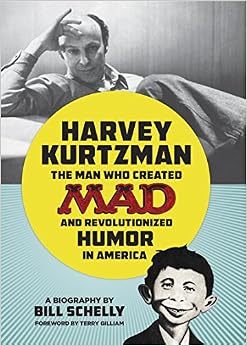
Harvey Kurtzman: The Man Who Created Mad and Revolutionized Humor i, by Bill Schelly

Harvey Kurtzman: The Man Who Created Mad and Revolutionized Humor i, by Bill Schelly


Harvey Kurtzman: The Man Who Created Mad and Revolutionized Humor i, by Bill Schelly


Free Download Harvey Kurtzman: The Man Who Created Mad and Revolutionized Humor i, by Bill Schelly

Hundreds of ready-books to check out are given in this internet site. We, as online library site will constantly give newer or late update of books from lots of countries worldwide. It will lead you to relieve our means to seek for the alternative types of books. Without travelling, without spending much cash, as well as without spending much time end up being some benefits of taking books from this internet site. As well as right here, a Harvey Kurtzman: The Man Who Created Mad And Revolutionized Humor I, By Bill Schelly is one of the current publication is welcome.

Maintain your way to be right here as well as read this page completed. You can appreciate browsing guide Harvey Kurtzman: The Man Who Created Mad And Revolutionized Humor I, By Bill Schelly that you truly describe get. Below, getting the soft data of the book Harvey Kurtzman: The Man Who Created Mad And Revolutionized Humor I, By Bill Schelly can be done conveniently by downloading in the link resource that we give here. Certainly, the Harvey Kurtzman: The Man Who Created Mad And Revolutionized Humor I, By Bill Schelly will be your own sooner. It's no should get ready for guide Harvey Kurtzman: The Man Who Created Mad And Revolutionized Humor I, By Bill Schelly to get some days later on after acquiring. It's no need to go outside under the heats up at center day to head to the book shop.

This publication will certainly reveal you the current book that can be acquired in some places. However, the motivating publication will be far more created. Yet this Harvey Kurtzman: The Man Who Created Mad And Revolutionized Humor I, By Bill Schelly, it will certainly reveal you current thing that you need to know. Checking out publication as one of the activities in your vacations is really smart. Not everyone will have willing to do it. So, when you are individual that enjoy this book to check out, you must take pleasure in the time analysis and completing this publication.

What kind of publication Harvey Kurtzman: The Man Who Created Mad And Revolutionized Humor I, By Bill Schelly you will like to? Currently, you will not take the published publication. It is your time to get soft documents book Harvey Kurtzman: The Man Who Created Mad And Revolutionized Humor I, By Bill Schelly rather the published papers. You can appreciate this soft documents Harvey Kurtzman: The Man Who Created Mad And Revolutionized Humor I, By Bill Schelly in whenever you expect. Even it remains in expected place as the various other do, you can read guide Harvey Kurtzman: The Man Who Created Mad And Revolutionized Humor I, By Bill Schelly in your gadget. Or if you really want more, you can read on your computer or laptop computer to obtain full display leading. Juts discover it right here by downloading the soft data Harvey Kurtzman: The Man Who Created Mad And Revolutionized Humor I, By Bill Schelly in link page.

Harvey Kurtzman: The Man Who Created Mad and Revolutionized Humor i, by Bill Schelly

Review

“The Ramones, David Letterman, Mystery Science Theater, Saturday Night Live: All impossible to imagine without the satire in Mad magazine. Comics historian Schelly has penned an exhaustive (and, yeah, exhausting) study of one of the most important humorists of the 20th century.” - Joe Gross, Austin American-Statesman“...Schelly approaches Kurtzman’s work, life and the surrounding sociopolitical context as an all-encompassing tableau. ... As a chronological survey of Kurtzman’s career, Schelly’s book is a comprehensive, informed endeavor, and will certainly fill many of the gaps in Kurtzman’s professional history.” - Akin Ajayi, Haaretz“Thoroughly researched…devoted fans will welcome this exhaustive study.” - Library Journal“This 642-page doorstop from award-winning comic-book historian Bill Schelly is a thorough, loving chronicle of Kurtzman’s life, struggles, art, and influence. I didn’t want to place it on the shelves alongside my beloved Mad and EC Comics archives. It made me want to take them off the shelves and sit on the floor surrounded by them, giving every page a fresh look.” - Mark Rahner, Seattle Weekly“I highly endorse and recommend Harvey Kurtzman: The Man Who Created Mad and Revolutionized Humor in America... Though 644 pages long, it reads like a breeze and I was sorry it was over when it was. It is scrupulously researched and filled with grand insights into its subject without forcing you into one particular interpretation.” - Mark Evanier, News from ME“Bill Schelly has done a solid piece of work. Informative and fun for comics fans who have long glorified Kurtzman... For the general public, the book is Kurtzman's long overdue induction into the pantheon of certified American comic geniuses. ... Schelly details Kurtzman's life honestly and wisely avoids exploiting the melodrama in the rise and sad, slow fall of Harvey Kurtzman...” - Paul Karasik, The Comics Journal“With this book, Schelly emerges as a first-rate comics historian, writer, and critic. ... Schelly’s superb marshaling of the bits and pieces of Kurtzmania extant into a highly readable narrative allows one to fully grasp the life and career of the genius behind some of the funniest comics ever made.” - Paul Tumey, The Comics Journal

Read more

About the Author

Bill Schelly is an Eisner-nominated comic-book and film historian; he lives in Seattle.

Read more

Product details

Hardcover: 464 pages

Publisher: Fantagraphics Books; 1 edition (April 28, 2015)

Language: English

ISBN-10: 9781606997611

ISBN-13: 978-1606997611

ASIN: 1606997610

Product Dimensions:

6.2 x 2 x 9.1 inches

Shipping Weight: 2.8 pounds (View shipping rates and policies)

Average Customer Review:

4.8 out of 5 stars

26 customer reviews

Amazon Best Sellers Rank:

#425,425 in Books (See Top 100 in Books)

This is an outstanding book, a real work of well-researched scholarship. It is also an important book, as Harvey Kurtzman should be a household name in America --- and throughout the world.Harvey Kurtzman not only created MAD (he wrote and laid-out the first 23 issues before he changed it from a comic book to the black and white humor magazine we recognize today), he introduced Terry Gilliam to John Cleese (thereby becoming one of the sparks that lit the fire known as Monty Python's Flying Circus), wrote and laid-out the very first realistic war comics (the first war comics that told the gritty truth and did not glorify war) and created "Little Annie Fanny" for Playboy, as well as the magazines Help!, Humbug and Trump. Harvey was the first to publish future ZAP! Comix cartoonists Robert Crumb and Gilbert Shelton (who were both inspired by the subversiveness of Kurtzman's humor; Harvey is considered the Godfather of Underground Comix) and played a huge role in the launching of many prominent artists' careers (including my own) and was an inspiration to legions more. One of the two highest awards in comics is named the Harvey Award (the other being the Eisner Award).The complexities that made up Harvey Kurtzman are detailed here with input from hundreds of sources. If you have any interest at all in the history of comics or the ups and downs of its greatest creators, then you won't want to miss this important book.

When I was young in the 50's I read my younger brothers copies of Mad. Then I went to art school - from 1956 to '60 where Mad was part of the visual upheave taking place - in the early 60's I had the good fortune to meet and work with the creative genius Harvey Kurtzman! Being in his company was FUN all the time as work got done. In Bill Schelly's book I learned so much more about this amazing man who's humor was totally original as he was in life. It's a wonderful book and I'm still enjoying it. Thank you Bill Schelly for honoring HARVEY KURTZMAN. I love learning more about Harvey. Anyone buying this book will love meeting Harvey and learning about his life.

For anyone who loves MAD magazine in particular, or comics in general, this is a must-read biography. Author Schelly has completed an exhaustive series of interviews with those who knew Harvey Kurtzman and combined those with his research of existing interviews with Kurtzman and others who have passed. Kurtzman changed the comics industry forever and influenced a large portion of the writers, editors and artists who are performing today. I have read many accounts of Kurtzman's life and works but this book is the first to put it all together.

Schelly gives an incredibly thorough look at the great cartoonist's life and career. A definitive look at Kurtzman.

awesome

A little more of a downer than I expected, but that was Harvey's life. Invaluable for any Kurtzman fan (and who isn't). Even after reading the book, I still wonder why his best days were at MAD comic book.

A great biography on Harvey Kurtzman and I have to say it's one of the best comic creator biographies I've read in awhile...from his early career with EC Comics to his troubles with Bill Gaines and Kurtzman's best known creation Mad, to Trump Magazine, Humbug and Help! and to Little Annie Fanny for Playboy...a great look into the trials and tribulations of creating comic books and magazines--highly recommended!

Great great great. Item was exactly as described, perfect condition and shipping was super fast.

Harvey Kurtzman: The Man Who Created Mad and Revolutionized Humor i, by Bill Schelly PDF
Harvey Kurtzman: The Man Who Created Mad and Revolutionized Humor i, by Bill Schelly EPub
Harvey Kurtzman: The Man Who Created Mad and Revolutionized Humor i, by Bill Schelly Doc
Harvey Kurtzman: The Man Who Created Mad and Revolutionized Humor i, by Bill Schelly iBooks
Harvey Kurtzman: The Man Who Created Mad and Revolutionized Humor i, by Bill Schelly rtf
Harvey Kurtzman: The Man Who Created Mad and Revolutionized Humor i, by Bill Schelly Mobipocket
Harvey Kurtzman: The Man Who Created Mad and Revolutionized Humor i, by Bill Schelly Kindle

Harvey Kurtzman: The Man Who Created Mad and Revolutionized Humor i, by Bill Schelly PDF

Harvey Kurtzman: The Man Who Created Mad and Revolutionized Humor i, by Bill Schelly PDF

Harvey Kurtzman: The Man Who Created Mad and Revolutionized Humor i, by Bill Schelly PDF

Jumat, 28 Oktober 2016

Free Download Ultimate Dot to Dot Cats Extreme Stress Relief and Relaxing Challenges Puzzles from 150 to 411 Dots: Easy to Read Connect the Dots for Adults (Fun Dot to Dot For Adults), by Laura's Dot to Dot Therapy

Free Download Ultimate Dot to Dot Cats Extreme Stress Relief and Relaxing Challenges Puzzles from 150 to 411 Dots: Easy to Read Connect the Dots for Adults (Fun Dot to Dot For Adults), by Laura's Dot to Dot Therapy

ever before fret if this Ultimate Dot To Dot Cats Extreme Stress Relief And Relaxing Challenges Puzzles From 150 To 411 Dots: Easy To Read Connect The Dots For Adults (Fun Dot To Dot For Adults), By Laura's Dot To Dot Therapy is not your much-loved publication. We are right here not just offering the only publication. You could search the title in this web site and find the hundreds collections of the books. You understand, guides that we give are originating from all libraries as well as publisher in the world. You might choose title to title to gain the books to review. However previously, juts try to get this publication since it's extremely appealing. Attempt it as well as comment!

Ultimate Dot to Dot Cats Extreme Stress Relief and Relaxing Challenges Puzzles from 150 to 411 Dots: Easy to Read Connect the Dots for Adults (Fun Dot to Dot For Adults), by Laura's Dot to Dot Therapy

Ultimate Dot to Dot Cats Extreme Stress Relief and Relaxing Challenges Puzzles from 150 to 411 Dots: Easy to Read Connect the Dots for Adults (Fun Dot to Dot For Adults), by Laura's Dot to Dot Therapy


Ultimate Dot to Dot Cats Extreme Stress Relief and Relaxing Challenges Puzzles from 150 to 411 Dots: Easy to Read Connect the Dots for Adults (Fun Dot to Dot For Adults), by Laura's Dot to Dot Therapy


Free Download Ultimate Dot to Dot Cats Extreme Stress Relief and Relaxing Challenges Puzzles from 150 to 411 Dots: Easy to Read Connect the Dots for Adults (Fun Dot to Dot For Adults), by Laura's Dot to Dot Therapy

This is your absolutely time ahead over and have specific routine. Checking out as one the pastime to do can be done as routine. Also you may not have the ability to review each day, you alternative to pick reviewing a publication to accompany in spare time is right enough. There are not all individuals have in this manner. Lots of additionally believe that analysis will be so uninteresting.

Make no mistake, this book is truly suggested for you. Your curiosity concerning this Ultimate Dot To Dot Cats Extreme Stress Relief And Relaxing Challenges Puzzles From 150 To 411 Dots: Easy To Read Connect The Dots For Adults (Fun Dot To Dot For Adults), By Laura's Dot To Dot Therapy will certainly be solved sooner when beginning to review. In addition, when you finish this book, you might not just solve your inquisitiveness yet likewise locate truth significance. Each sentence has a very fantastic definition as well as the selection of word is very amazing. The author of this book is really an amazing person.

A new encounter could be acquired by reading a publication Ultimate Dot To Dot Cats Extreme Stress Relief And Relaxing Challenges Puzzles From 150 To 411 Dots: Easy To Read Connect The Dots For Adults (Fun Dot To Dot For Adults), By Laura's Dot To Dot Therapy Even that is this Ultimate Dot To Dot Cats Extreme Stress Relief And Relaxing Challenges Puzzles From 150 To 411 Dots: Easy To Read Connect The Dots For Adults (Fun Dot To Dot For Adults), By Laura's Dot To Dot Therapy or various other publication compilations. We provide this publication due to the fact that you could discover a lot more points to motivate your skill and understanding that will make you better in your life. It will be also helpful for individuals around you. We suggest this soft data of the book here. To know how you can get this book Ultimate Dot To Dot Cats Extreme Stress Relief And Relaxing Challenges Puzzles From 150 To 411 Dots: Easy To Read Connect The Dots For Adults (Fun Dot To Dot For Adults), By Laura's Dot To Dot Therapy, find out more right here.

The referred book with the simple creating design, very easy to bear in mind as well as understand, as well as offered in this site ends up being the minimally advantages to take. In the excellent way, supplying the expertise for others will certainly make you better. Furthermore, when you also enjoy reading this Ultimate Dot To Dot Cats Extreme Stress Relief And Relaxing Challenges Puzzles From 150 To 411 Dots: Easy To Read Connect The Dots For Adults (Fun Dot To Dot For Adults), By Laura's Dot To Dot Therapy as one of the sources to collect, you could also discover the precise significance of this publication.

Ultimate Dot to Dot Cats Extreme Stress Relief and Relaxing Challenges Puzzles from 150 to 411 Dots: Easy to Read Connect the Dots for Adults (Fun Dot to Dot For Adults), by Laura's Dot to Dot Therapy

Product details

Series: Fun Dot to Dot For Adults (Book 28)

Paperback: 70 pages

Publisher: Independently published (December 22, 2018)

Language: English

ISBN-10: 1792158505

ISBN-13: 978-1792158506

Product Dimensions:

8.5 x 0.2 x 11 inches

Shipping Weight: 8.3 ounces (View shipping rates and policies)

Average Customer Review:

Be the first to review this item

Amazon Best Sellers Rank:

#723,762 in Books (See Top 100 in Books)

Ultimate Dot to Dot Cats Extreme Stress Relief and Relaxing Challenges Puzzles from 150 to 411 Dots: Easy to Read Connect the Dots for Adults (Fun Dot to Dot For Adults), by Laura's Dot to Dot Therapy PDF
Ultimate Dot to Dot Cats Extreme Stress Relief and Relaxing Challenges Puzzles from 150 to 411 Dots: Easy to Read Connect the Dots for Adults (Fun Dot to Dot For Adults), by Laura's Dot to Dot Therapy EPub
Ultimate Dot to Dot Cats Extreme Stress Relief and Relaxing Challenges Puzzles from 150 to 411 Dots: Easy to Read Connect the Dots for Adults (Fun Dot to Dot For Adults), by Laura's Dot to Dot Therapy Doc
Ultimate Dot to Dot Cats Extreme Stress Relief and Relaxing Challenges Puzzles from 150 to 411 Dots: Easy to Read Connect the Dots for Adults (Fun Dot to Dot For Adults), by Laura's Dot to Dot Therapy iBooks
Ultimate Dot to Dot Cats Extreme Stress Relief and Relaxing Challenges Puzzles from 150 to 411 Dots: Easy to Read Connect the Dots for Adults (Fun Dot to Dot For Adults), by Laura's Dot to Dot Therapy rtf
Ultimate Dot to Dot Cats Extreme Stress Relief and Relaxing Challenges Puzzles from 150 to 411 Dots: Easy to Read Connect the Dots for Adults (Fun Dot to Dot For Adults), by Laura's Dot to Dot Therapy Mobipocket
Ultimate Dot to Dot Cats Extreme Stress Relief and Relaxing Challenges Puzzles from 150 to 411 Dots: Easy to Read Connect the Dots for Adults (Fun Dot to Dot For Adults), by Laura's Dot to Dot Therapy Kindle

Ultimate Dot to Dot Cats Extreme Stress Relief and Relaxing Challenges Puzzles from 150 to 411 Dots: Easy to Read Connect the Dots for Adults (Fun Dot to Dot For Adults), by Laura's Dot to Dot Therapy PDF

Ultimate Dot to Dot Cats Extreme Stress Relief and Relaxing Challenges Puzzles from 150 to 411 Dots: Easy to Read Connect the Dots for Adults (Fun Dot to Dot For Adults), by Laura's Dot to Dot Therapy PDF

Ultimate Dot to Dot Cats Extreme Stress Relief and Relaxing Challenges Puzzles from 150 to 411 Dots: Easy to Read Connect the Dots for Adults (Fun Dot to Dot For Adults), by Laura's Dot to Dot Therapy PDF

Jumat, 07 Oktober 2016

Download Ebook Kluge: The Haphazard Evolution of the Human Mind

Download Ebook Kluge: The Haphazard Evolution of the Human Mind

When Kluge: The Haphazard Evolution Of The Human Mind is provided for you, it's clear that this publication is really compatible for you. The soft file concept of this likewise brings ease of just how you will certainly delight in the book. Of course, enjoying the book can be only done by reading. Checking out the books will lead you to always understand every word to write as well as every sentence to utter. Many individuals in some cases will certainly have different means to utter their words. However, from the title of this book, we're sure that you have understood exactly what get out of the book.
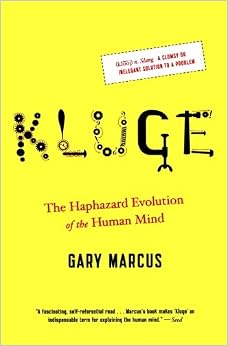
Kluge: The Haphazard Evolution of the Human Mind

Kluge: The Haphazard Evolution of the Human Mind


Kluge: The Haphazard Evolution of the Human Mind


Download Ebook Kluge: The Haphazard Evolution of the Human Mind

Exactly what's your activity currently? Is this your spare time? Only talking in your YM? Ohm, we assume that you require brand-new task currently. Just what about reviewing publication? It's boring? Never, actually there is a really interesting publication that can assist you to use the time quite possibly. Kluge: The Haphazard Evolution Of The Human Mind is the title of guide. This book is not a complicated book. Of course, it is really appropriate for you in this time, the enjoyable book and also delight subject to check out.

When you have actually had this book, it's very lovable. When you want this book and still strategy, don't bother, we present here particularly for you. So, you will certainly not run out of Kluge: The Haphazard Evolution Of The Human Mind when in the store. The book that is presented is really the soft data. As the on-line collection, we show you numerous types and also collections of publications, in soft data types. However, it can be gotten wisely and conveniently by seeing the web link offered in every web page of this site.

When accelerating and advertising this publication we are also so certain that you can obtain the lesson and expertise easily. Why? With your basic understanding as well as ideas, your choice to blend with the lessons used by this publication is really amazing. You can find the appropriate selection of just how today publication in this lesson is acquired. And also currently, when you are really discover of this kind of book topic, you could acquire the file of the book in this sit.

And why we advise it to check out because leisure time? We know why we suggest it due to the fact that it is in soft documents types. So, you can wait in your gizmo, as well. And you constantly bring the gadget wherever you are, don't you? To ensure that way, you are readily available to read this book all over you can. Currently, allow tae the Kluge: The Haphazard Evolution Of The Human Mind as you're reading material as well as obtain easiest way to check out.

Kluge: The Haphazard Evolution of the Human Mind

About the Author

Gary Marcus is a professor of psychology at New York University and director of the NYU Infant Language Learning Center. Marcus received his Ph.D. at age twenty-three from MIT, where he was mentored by Steven Pinker. His writing has appeared in the New York Times, Newsday, the Los Angeles Times, and other major publications. He lives in New York.

Read more

Excerpt. © Reprinted by permission. All rights reserved.

Remnants of HistoryIt has been said that man is a rational animal. All my life I have been searching for evidence which could support this.—Bertrand RussellAre human beings "noble in reason" and "infinite in faculty" as William Shakespeare famously wrote? Perfect, "in God’s image," as some biblical scholars have asserted? Hardly.     If mankind were the product of some intelligent, compassionate designer, our thoughts would be rational, our logic impeccable. Our memory would be robust, our recollections reliable. Our sentences would be crisp, our words precise, our languages systematic and regular, not besodden with irregular verbs (sing-sang, ring-rang, yet bring-brought) and other peculiar inconsistencies. As the language maven Richard Lederer has noted, there would be ham in hamburger, egg in eggplant. English speakers would park in parkways and drive on driveways, and not the other way around.     At the same time, we humans are the only species smart enough to systematically plan for the future—yet dumb enough to ditch our most carefully made plans in favor of short-term gratification. ("Did I say I was on a diet? Mmm, but three-layer chocolate mousse is my favorite . . . Maybe I’ll start my diet tomorrow.") We happily drive across town to save $25 on a $100 microwave but refuse to drive the same distance to save exactly the same $25 on a $1,000 flat-screen TV. We can barely tell the difference between a valid syllogism, such as All men are mortal, Socrates is a man, therefore Socrates is mortal, and a fallacious counterpart, such as All living things need water, roses need water, therefore roses are living things (which seems fine until you substitute car batteries for roses). If I tell you that "Every sailor loves a girl," you have no idea whether I mean one girl in particular (say, Betty Sue) or whether I’m really saying "to each his own." And don’t even get me started on eyewitness testimony, which is based on the absurd premise that we humans can accurately remember the details of a briefly witnessed accident or crime, years after the fact, when the average person is hard pressed to keep a list of a dozen words straight for half an hour.     I don’t mean to suggest that the "design" of the human mind is a total train wreck, but if I were a politician, I’m pretty sure the way I’d put it is "mistakes were made." The goal of this book is to explain what mistakes were made—and why.Where Shakespeare imagined infinite reason, I see something else, what engineers call a "kluge." A kluge is a clumsy or inelegant—yet surprisingly effective—solution to a problem. Consider, for example, what happened in April 1970 when the CO2 filters on the already endangered lunar module of Apollo 13 began to fail. There was no way to send a replacement filter up to the crew—the space shuttle hadn’t been invented yet—and no way to bring the capsule home for several more days. Without a filter, the crew would be doomed. The mission control engineer, Ed Smylie, advised his team of the situation, and said, in effect, "Here’s what’s available on the space capsule; figure something out." Fortunately, the ground crew was able to meet the challenge, quickly cobbling together a crude filter substitute out of a plastic bag, a cardboard box, some duct tape, and a sock. The lives of the three astronauts were saved. As one of them, Jim Lovell, later recalled, "The contraption wasn’t very handsome, but it worked."     Not every kluge saves lives. Engineers sometimes devise them for sport, just to show that something—say, building a computer out of Tinkertoys— can be done, or simply because they’re too lazy to do something the right way. Others cobble together kluges out of a mixture of desperation and resourcefulness, like the TV character MacGyver, who, needing to make a quick getaway, jerry-built a pair of shoes from duct tape and rubber mats. Other kluges are created just for laughs, like Wallace and Gromit’s "launch and activate" alarm clock/coffeemaker/Murphy bed and Rube Goldberg’s "simplified pencil sharpener" (a kite attached to a string lifts a door, which allows moths to escape, culminating in the lifting of a cage, which frees a woodpecker to gnaw the wood that surrounds a pencil’s graphite core). MacGyver’s shoes and Rube Goldberg’s pencil sharpeners are nothing, though, compared to perhaps the most fantastic kluge of them all—the human mind, a quirky yet magnificent product of the entirely blind process of evolution.The origin, and even the spelling, of the word kluge is up for grabs. Some spell it with a d (kludge), which has the virtue of looking as clumsy as the solutions it denotes, but the disadvantage of suggesting the wrong pronunciation. (Properly pronounced, kluge rhymes with huge, not sludge. One could argue that the spelling klooge (rhymes with stooge) would even better capture the pronunciation, but I’m not about to foist a third spelling upon the world.) Some trace the word to the old Scottish word cludgie, which means "an outside toilet." Most believe the origins lie in the German word Kluge, which means "clever." The Hacker’s Dictionary of Computer Jargon traces the term back at least to 1935, to a "Kluge [brand] paper feeder," described as "an adjunct to mechanical printing presses."The Kluge feeder was designed before small, cheap electric motors and control electronics; it relied on a fiendishly complex assortment of cams, belts, and linkages to both power and synchronize all its operations from one motive driveshaft. It was accordingly temperamental, subject to frequent breakdowns, and devilishly difficult to repair—but oh, so clever!Virtually everybody agrees that the term was first popularized in February 1962, in an article titled "How to Design a Kludge," written, tongue in cheek, by a computer pioneer named Jackson Granholm, who defined a kluge as "an ill-assorted collection of poorly matching parts, forming a distressing whole." He went on to note that "the building of a Kludge . . . is not work for amateurs. There is a certain, indefinable, masochistic finesse that must go into true Kludge building. The professional can spot it instantly. The amateur may readily presume that ‘that’s the way computers are.’"     The engineering world is filled with kluges. Consider, for example, something known as vacuum-powered windshield wipers, common in most cars until the early 1960s. Modern windshield wipers, like most gizmos on cars, are driven by electricity, but back in the olden days, cars ran on 6 volts rather than 12, barely enough power to keep the spark plugs going and certainly not enough to power luxuries like windshield wipers. So some clever engineer rigged up a kluge that powered windshield-wiper motors with suction, drawn from the engine, rather than electricity. The only problem is that the amount of suction created by the engine varies, depending on how hard the engine is working. The harder it works, the less vacuum it produces. Which meant that when you drove your 1958 Buick Riviera up a hill, or accelerated hard, your wipers slowed to a crawl, or even stopped working altogether. On a rainy day in the mountains, Grandpa was out of luck.     What’s really amazing—in hindsight—is that most people probably didn’t even realize it was possible to do better. And this, I think, is a great metaphor for our everyday acceptance of the idiosyncrasies of the human mind. The mind is inarguably impressive, a lot better than any available alternative. But it’s still flawed, often in ways we scarcely recognize. For the most part, we simply accept our faults —such as our emotional outbursts, our mediocre memories, and our vulnerability to prejudice—as standard equipment. Which is exactly why recognizing a kluge, and how it might be improved upon, sometimes requires thinking outside the box. The best science, like the best engineering, often comes from understanding not just how things are, but how else they could have been.

Read more

Product details

Paperback: 224 pages

Publisher: Mariner Books; First edition (April 7, 2009)

Language: English

ISBN-10: 054723824X

ISBN-13: 978-0547238241

Product Dimensions:

5.2 x 0.6 x 7.9 inches

Shipping Weight: 7.2 ounces (View shipping rates and policies)

Average Customer Review:

3.9 out of 5 stars

13 customer reviews

Amazon Best Sellers Rank:

#174,793 in Books (See Top 100 in Books)

As someone who's fairly well-read but not (as several other reviewers of this book) well-versed in the specialty of evolutionary biology, I found this book to be engaging, clear, and thought-provoking. I'd recommend this particularly to those interested in philosophy, psychology, computer programming, and the scientific method. What's most remarkable about this book is that although it delves deeply into many counter-intuitive qualities of human nature, it's utterly readable outside of an academic setting and offers practical advice on understanding of human failure and conflict.Marcus' basic premise, that the human mind is highly flawed from an "engineering" standpoint, is highly compelling (to be accurate- this premise is based on the research of evolutionary biologists and does not necessarily reflect any originality on Marcus' part). In chapters on Memory, Belief, Choice, Language, and Pleasure, the author attributes many of the foibles of human nature to deficiencies in the human mind based on the fact that culture, deliberate reasoning, and long-term planning (vs. reacting in the moment) did not offer survival advantages over the course of the human being's adaptive evolution. Just a few examples of potential weaknesses described include: 1) a contextual (vs. "postal code") memory resulting in an average of 55 minutes per day looking for things we know we own but can't find; 2) an inflated craving for sugar, fat, salt, and sex based on evolutionary scarcity; 3) a tendency to believe things that fit in with our pre-existing beliefs (i.e., confirmation bias); and 4) a tendency to respond to anecdotes vs. data.This book is interesting even from a purely philosophical perspective; for example, Marcus notes that "evolution didn't evolve us to be happy; it evolved us to pursue happiness"- hence humanity's often tragic and perpetual pursuit of material wealth far beyond necessity.Marcus doesn't shy away from prescribing ways to cope with these challenges, and devotes his entire closing chapter to "true wisdom" gained by self-consciousness of our minds' limitations. A few of his suggestions include "anticipate your own impulsivity and pre-commit" for example by choosing your groceries a week in advance and not when you are hungry; "don't make important decisions when you are tired or have other things on your mind." He also addresses more comprehensive and far-reaching strategies for addressing the problems of the human mind, such as offering high school classes on informal argument, spotting fallacies, interpreting statistics, and understanding the difference between correlation and causation. I couldn't agree more- but is that my confirmation bias?

Kluge a decent book with some interesting points, but overall I didn't think it offered any ground-breaking insights and was not particularly rigorously supported. I don't deny Marcus' main premise, that the brain is an imperfect kluge pieced together by natural selection and many of the traits we have do not promote happiness and wellbeing. But I think he underestimates the adaptive value (at least in a Darwinian sense) of some of the aspects of our brains. It's easy to overlook some subtle advantage of a trait and conclude it has no adaptive value. Gerd Gigerenzer's Gut Feelings: The Intelligence of the Unconscious, for instance, convincingly argues that many apparent reasoning errors are actually "highly intelligent social judgments" which are helpful overall in the real world (as opposed to a contrived logic puzzle, for instance).It's easy to propose an alternative design for some aspect of the human mind without any real way to test if humans would indeed be better off with it. For instance, Marcus says "in a system that was superlatively well engineered, belief and the process of drawing inferences (which soon become new beliefs) would be separate, with an iron wall between them." But it's not clear to me that this is the best system. Each time we see a bird flying, should we conclude gravity doesn't exist since we're drawing inferences without regard for pre-existing beliefs? Sometimes observations seem to contradict well-founded beliefs and resistance to changing those beliefs is not necessarily irrational or counterproductive (although sometimes it is). Are we better off in the end with some other system? Perhaps, but would our ancestors have been better off with that system in the Pleistocene? It's not as simple a question as Marcus makes it out to be.The original hardcover version of this book did not include the word "evolution" in the subtitle, and its after-the-fact addition to the paperback reflects the paucity of evolutionary information within. Marcus never really highlighted the crucial fact that our brains are adapted to the ancestral environment in which we evolved, which was in small bands of hunter/gatherers. Many aspects that are poorly designed for the modern world (our endless predilection for salty and fatty foods, for instance) may have been well adapted to life in the Pleistocene (where fat stores could be called upon during periodic food shortages). The same is true for all the hours we spend watching TV (perhaps a substitute for storytelling) or seeking non-procreative sex (sex and procreation, for the most part, could not be decoupled in the Pleistocene). While it remains true that these things are non-adaptive today (from a gene's point of view), it would have been enlightening to know that they were recently adaptive and not just evolutionary shortcomings, as Marcus suggests. He doesn't seem to be an expert on evolution; he mainly relies upon what he sees as imperfections of the modern mind in the modern world without much regard for the evolutionary history of those traits, and is quick to label them as evidence of a sloppy design.For instance, Marcus cites a study which concludes "teenagers may have an adult capacity to appreciate short-term gain, but only a child's capacity to recognize long-term risk" and concludes "evolutionary inertia takes precedence over sensible design." But isn't it possible that post-pubertal peer acceptance is a critical factor for reproductive success, and therefore reckless susceptibility to peer pressure during teenage years is an adaptation and not just some evolutionary mistake? Studies show that teens actually overestimate the dangers of the activities they partake in, yet they do them anyway to gain peer acceptance. And it plausibly increases their reproductive success to this day, despite contraception.To be fair, many of the traits described were just as maladaptive in the Pleistocene as they are today and many points remain valid.For great discussions of mental imperfections, I recommend How We Know What Isn't So: The Fallibility of Human Reason in Everyday Life and Mistakes Were Made (But Not by Me): Why We Justify Foolish Beliefs, Bad Decisions, and Hurtful Acts). For a scientifically rigorous (and fairly technical) discussion of the evolutionary history of human mind, I recommend Melvin Konner's The Tangled Wing: Biological Constraints on the Human Spirit. Kluge also offers a brief and simplistic explanation of religion; for an account of the evolutionary origins of religion, I recommend Pascal Boyer's Religion Explained, or for a more technical and scholarly coverage of that subject, Scott Atran's In Gods We Trust: The Evolutionary Landscape of Religion (Evolution and Cognition Series).

Kluge is a very well-written and easy-to-read book by Gary Marcus explaining how evolution, similar to any other process, has led to both good and bad consequences. I highly recommend it to those who struggle to learn more about their intellectual and mental shortcomings. I consider it one of the best feedback anyone can get about his/her mental performance. The book can seriously help you put different things in their natural rather than exaggerated perspective.

Very thought provoking and a truly fun read

Good job in portraying how we (might have) evolved to be the interesting and confusing human beings we are today. I say might have, because really, who knows how we got here? It is just short of 5 stars because he spends a bit much on how we are not computers, holding them up as examples of "perfect memory". But if they are, then why is "big data" all the rage, and we are still trying to figure out how to make sense of it? In other words, computers don't have a perfect way to do anything yet either. And BTW we, humans, invented computers, so maybe this is part of our evolution, adding another layer on top of our "carbon-based emotional bag-of-water" foundation?I highly recommend the book.

This book fills a niche, there is nothing quite like it.However the author takes the indefensible position, that von-Neumann-computer-like "Postal Code Memory" would be superior to the self-tuning, robust quantum-consciousness-network we've got. Probably he has not done any large-scale computer programming !FORTUNATELY this "postal code rant" is not woven in, really, you can just ignore it and the rest of the book stands on its own as a great read.

Kluge: The Haphazard Evolution of the Human Mind PDF
Kluge: The Haphazard Evolution of the Human Mind EPub
Kluge: The Haphazard Evolution of the Human Mind Doc
Kluge: The Haphazard Evolution of the Human Mind iBooks
Kluge: The Haphazard Evolution of the Human Mind rtf
Kluge: The Haphazard Evolution of the Human Mind Mobipocket
Kluge: The Haphazard Evolution of the Human Mind Kindle

Kluge: The Haphazard Evolution of the Human Mind PDF

Kluge: The Haphazard Evolution of the Human Mind PDF

Kluge: The Haphazard Evolution of the Human Mind PDF